What Causes Crystal Induced Nephropathy
Mar 16, 2023
Introduction:
Crystalline nephropathies are a unique form of kidney disease characterized by the histologic findings of intrarenal crystal deposition. The intrinsic nature of some molecules and ions combined with favorable tubular fluid physiology leads to crystal precipitation and deposition within the tubular lumens. Crystal deposition promotes kidney injury through tubular obstruction and both direct and indirect cytotoxicities. Further kidney injury develops from inflammation triggered by these crystals. From a clinical standpoint, crystalline nephropathies are associated with abnormal urinalysis and urinary sediment findings, tauopathies, acute kidney injury (AKI), and/or chronic kidney disease (CKD). Urine sediment examination is often helpful in alerting clinicians to the possibility of crystal-related kidney injury. The identification of crystals within the kidneys on biopsy by pathologists prompts clinicians to evaluate patients for medication-related kidney injury, dysproteinemia-related malignancies, and certain inherited disorders.
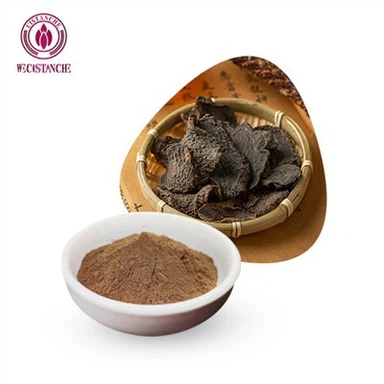
Cistanche Tubulosa extract can effectively help the human body to improve crystalline nephropathy, enhance human immunity and reduce the operating burden of kidneys.

Click Here to know Cistanche's Benefits for Kidney Disease
An important but somewhat under-recognized cause of kidney disease is crystalline nephropathies. This entity is characterized by the histologic findings of intrarenal crystal deposition, primarily involving the tubulointerstitium. Clinically, patients present with urinary abnormalities, such as crystalluria, proteinuria, and cylinders, whereas tubulopathies, AKI, and CKD may also develop. The urine microscopic finding of various pathologic crystals and/or crystal-containing casts signals the possibility of crystalline nephropathy. Identification of crystals within the kidneys on biopsy is definitive for a diagnosis of crystalline nephropathy and necessitates evaluation for the underlying cause. The pathogenesis of crystal-related kidney injury is briefly reviewed followed by a discussion of crystalline nephropathies of interest to clinicians and pathologists including those owing to medications, Dysproteinemias, and inherited disorders. Although calcium- and uric acid-related crystalline nephropathies are common, they are not discussed.

Click Here to Get What is Cistanche tubulosa
Pathogenesis of Crystalline Nephropathies
Intrarenal crystal deposition is mainly due to high concentrations of ions and molecules passing through the renal tubules, which increases the likelihood of matrix supersaturation and crystal nucleation. Due to certain intrinsic properties, crystals are precipitated outside the kidney and deposited inside the kidney. They are molecules or ions that aggregate at a symmetric fixed distance and form an ordered 3D structure. After their supersaturation and nucleation, the crystals aggregate and grow as the number of ions or molecules increases. The development of damaged cell membranes combined with the supersaturation of molecules with crystal formation potential in urine provides the basis for crystal deposition. Upregulation of cell surface molecules by damaged cells creates a local environment conducive to crystal nucleation and adhesion, providing a breeding ground for further crystal growth.
Crystal deposition leads to tubular obstruction and crystal-related direct and indirect kidney injury. Engulfed crystals destabilize lysosomes, which release their contents and induce cellular stress and autophagic cell death. Necroptosis of renal tubular cells occurs when phagocytosed various crystals destroy lysosomes or phagolysosomes and release cathepsin b, cleaving key regulators of the cell death pathway, risk, and pseudokinase MLKL. In addition, crystal-triggered cell necrosis promotes the release of many substances into the extracellular compartment, including danger-associated molecular patterns, histones, double-stranded DNA, mitochondrial DNA, demethylated DNA and RNA, adenosine triphosphate, and uric acid. One or more of these bind to death receptors on neigh dry cells to further amplify cell necrosis.

Herba Cistanches
Another important step in crystal-associated kidney injury is the subsequent inflammatory process that occurs. Inflammatory cell injury and necroinflammatory response, i.e., inflammatory response caused by necrotizing cell death, promote renal injury. Inflammatory injury in the kidney is partly due to the activation of toll-like receptors, whereas complement activation and leukocyte invasion are the main effects of deleterious inflammation following crystal-associated renal tubular cell injury. Induction of NLRP3 inflammatory vesicle activity in renal phagocytes and secretion of interleukin-1b further promote intrarenal inflammation through interleukin-1 receptor interactions. In a mouse model of calcium oxalate crystalline nephropathy, upregulation of long-stranded noncoding RNA-H19 expression also led to renal tubular cell injury. Upregulated long-stranded non-coding RNA-H19 caused inflammatory injury by competitively binding to microscopic RNA -216b, which subsequently activated the risk-associated molecular pattern high mobility group protein 1, bound to toll-like receptors, and activated the NF-kB pathway. This crystal-stimulated pathway ultimately increases the transcription and expression of several pro-inflammatory cytokines and chemokines that induce renal tubular cell injury.
Medication-Induced Crystalline Nephropathies
Many of the drugs used in clinical practice are associated with leisure and lens nephropathy. Clinicians and pathologists must be aware of the causative drugs, their clinical presentation, and histological features to ensure proper diagnosis and treatment. Crystal deposition is mainly due to enhanced drug or metabolite excretion through the kidneys and drug supersaturation in the urine. Causes of drug supersaturation in the renal tubules include insufficient blood volume (decreasing urinary flow rate) and excessive drug dose (increasing urinary drug concentration). Depending on the pK of the drug administered, urine pH can also enhance crystal supersaturation. Underlying acute or chronic kidney disease may further increase the risk of drug-related crystalline nephropathy.
However, the Phenyletoside compounds and Echinoside in Cistanches extract have a relaxant effect on renal tubules, thereby preventing inflammation caused by renal tubular obstruction, and also preventing crystal formation in renal tubules, reducing the chance of renal injury.

REFERENCES:
1.Yarlagadda SG, Perazella MA. Drug-induced crystal nephropathy: an update. Expert Opin Drug Saf. 2008;7:147–158.
2. Daudon M, Frochot V, Bazin D, Jungers P. Drug-induced kidney stones and crystalline nephropathy: pathophysiology, prevention, and treatment. Drugs. 2018;78:163–201.
3. Luciano RL, Perazella MA. Crystalline-induced kidney disease: a case for urine microscopy. Clin Kidney J. 2015;8:131– 136.
4. Herlitz LC, D’Agati VD, Markowitz GS. Crystalline nephropathies. Arch Pathol Lab Med. 2012;136:713–720.
5. Aggarwal KP, Narula S, Kakkar M, Tandon C. Nephrolithiasis: molecular mechanism of renal stone formation and the critical role played by modulators. BioMed Res Int. 2013;2013:292953.
6. Mulay SR, Shi C, Ma X, Anders HJ. Novel insights into crystal-induced kidney injury. Kidney Dis (Basel). 2018;4:49– 57.
7. Mulay SR, Evan A, Anders HJ. Molecular mechanisms of crystal-related kidney inflammation and injury. Implications for cholesterol embolism, crystalline nephropathies, and kidney stone disease. Nephrol Dial Transplant. 2014;29:507–514.
8. Knauf F, Asplin JR, Granja I, et al. NALP3-mediated inflammation is a principal cause of progressive renal failure in
oxalate nephropathy. Kidney Int. 2013;84:895–901.
9. Liu H, Ye T, Yang X, et al. H19 promote calcium oxalate nephrocalcinosis-induced renal tubular epithelial cell injury via a ceRNA pathway. EBioMedicine. 2019;50:366–378.
10. Ludwig-Portugall I, Bartok E, Dhana E, et al. An NLRP3-specific inflammasome inhibitor attenuates crystal-induced kidney fibrosis in mice. Kidney Int. 2016;90:525–539.
11. Martin-Higueras C, Ludwig-Portugall I, Hoppe B, Kurts C. Targeting kidney inflammation as a new therapy for primary
hyperoxaluria? Nephrol Dial Transplant. 2019;34:908–914.
12. Perazella MA. Pharmacology behind common drug neph toxicities. Clin J Am Soc Nephrol. 2018;13:1897–1908.
13. Perazella MA. Drug-induced acute kidney injury: diverse mechanisms of tubular injury. Curr Opin Crit Care. 2019;25:550–557.